Ulrich Lange · 2 October 2026
Understanding Data Persistence Methods Within Personal Knowledge Bases Amid Updates to Underlying Service Architectures
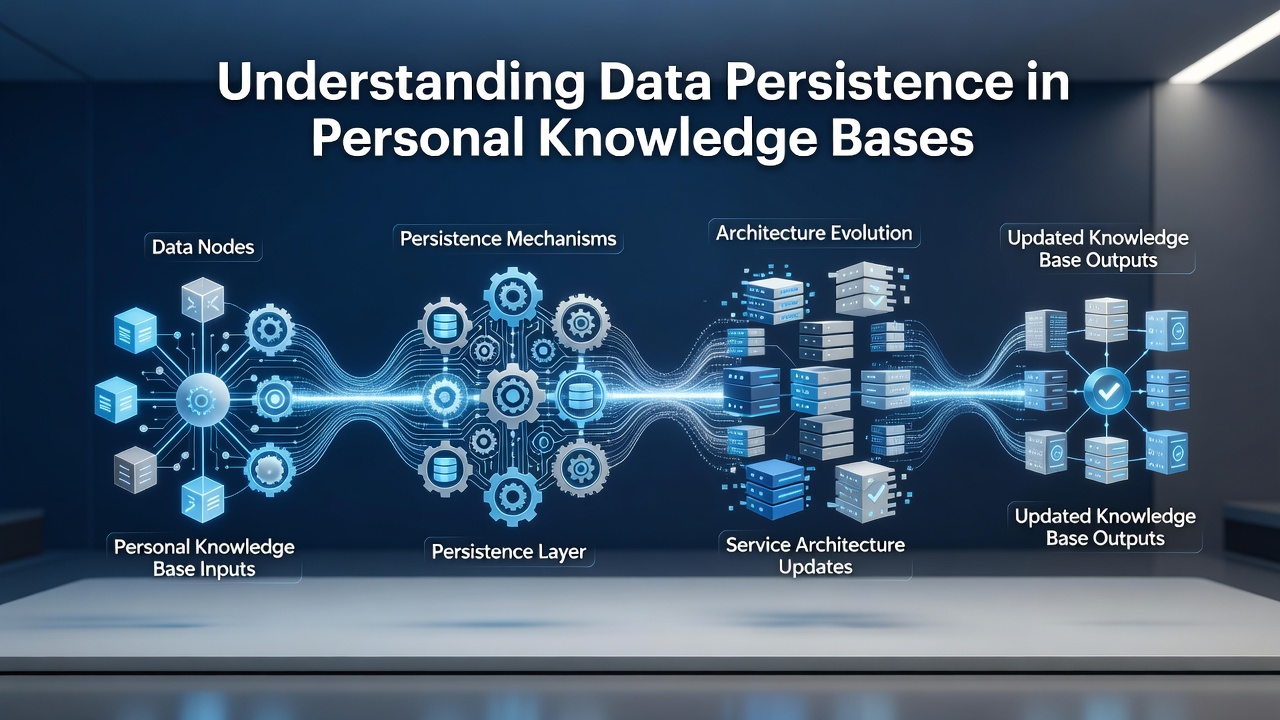
Personal knowledge bases rely on various persistence methods to keep user-generated content intact when service providers modify their underlying architectures, and these approaches range from local file exports to distributed database replication that maintains content across multiple nodes even after platform-level changes occur.
Core Persistence Techniques in Knowledge Management Systems
Local storage protocols allow users to maintain copies of notes and metadata on personal devices, while cloud synchronization services replicate data across remote servers using formats such as JSON or Markdown that remain readable regardless of shifts in the host application's code base. Researchers at institutions tracking digital preservation note that hybrid models combining on-device caches with periodic API-driven backups provide redundancy when vendors update their infrastructure, because data written to open standards survives proprietary format alterations more reliably than content locked inside closed ecosystems.
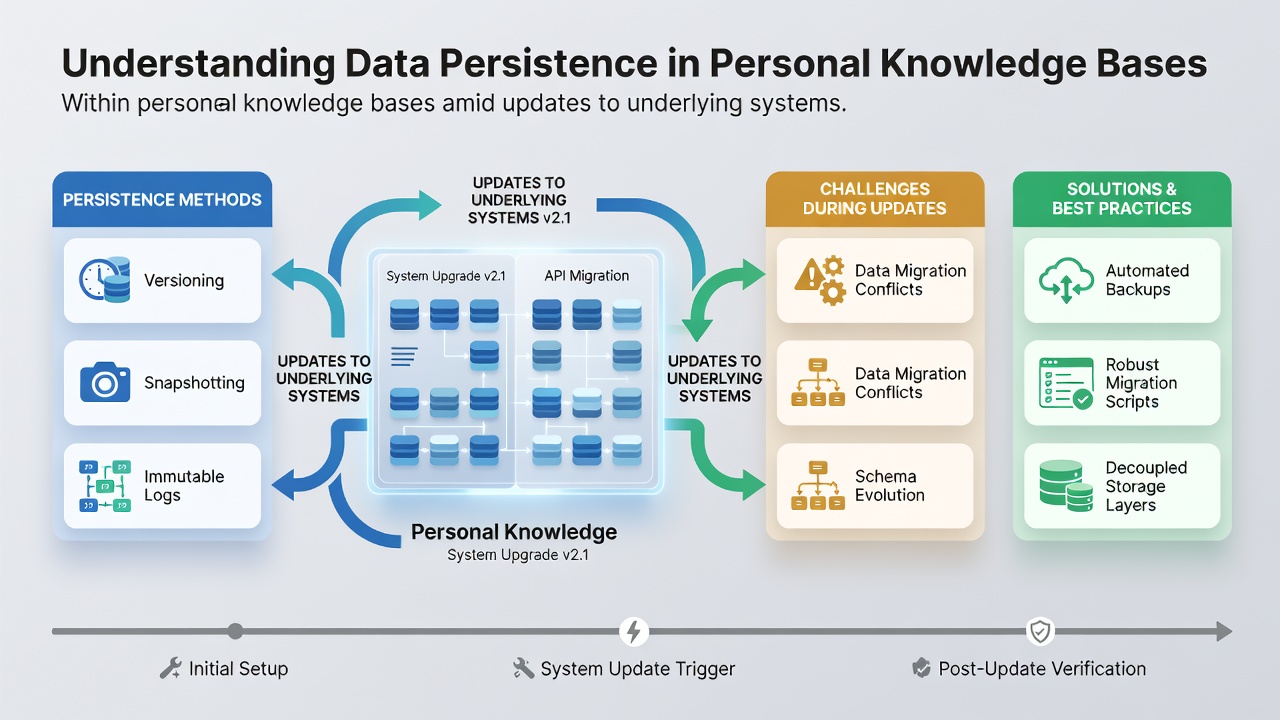
Version control systems integrated into some knowledge base platforms create immutable snapshots of entries at regular intervals, and these records enable recovery after architecture migrations because each commit preserves the full history alongside associated attachments. Data from academic studies on information longevity shows that export functions supporting formats like HTML, PDF, and plain text further reduce dependency on any single provider's continued operation, especially when updates involve changes to database schemas or authentication layers.
Challenges Arising From Architecture Modifications
Service architecture updates often involve migration to new database engines or revised data models, and such transitions can interrupt access if persistence mechanisms lack forward compatibility. Observers tracking enterprise software deployments report that applications without standardized export pathways sometimes experience temporary data inaccessibility during these periods, whereas systems built around portable containers or graph-based representations tend to handle revisions with fewer disruptions.
In October 2026 several major knowledge base providers completed backend transitions to containerized microservices, and independent analyses confirmed that platforms relying solely on proprietary cloud tables encountered longer recovery windows compared with those supporting direct file-level access. Experts examining these events found that persistent identifiers adn checksum verification routines helped maintain content integrity by allowing automated reconciliation after schema alterations.
Implementation Patterns Observed Across Platforms
Many contemporary personal knowledge bases employ layered caching that keeps recent entries available offline while background processes handle synchronization with updated remote stores, and this design isolates users from short-term service interruptions. Studies conducted by research groups in Australia and Canada indicate that asynchronous replication combined with conflict-resolution algorithms reduces data loss risks during architecture refreshes because concurrent edits merge automatically once connectivity resumes.
API endpoints documented by platform maintainers provide programmatic access for bulk retrieval, allowing third-party tools to pull content into alternative storage solutions before or after updates take effect. Those who monitor digital infrastructure trends note that adoption of open standards such as ActivityPub or the Solid protocol has increased among newer knowledge base services, because these frameworks decouple data ownership from any particular hosting architecture.
Verification and Recovery Procedures
Checksum-based validation routines compare local and remote copies after any backend change, and automated scripts can flag discrepancies for manual review when architecture modifications affect storage layouts. Government-affiliated technology assessment bodies in the European Union have published guidelines recommending regular integrity audits for personal data collections, and these documents emphasize the value of maintaining multiple independent persistence layers to guard against single-point failures.
Case examples from institutional deployments show that teams using both encrypted local archives and geographically distributed cloud replicas recovered full datasets within hours of a provider-side migration, whereas single-layer approaches required extended restoration efforts. Persistent metadata tags that survive format conversions further aid in reindexing content once new architectures stabilize.
Conclusion
Data persistence within personal knowledge bases continues to evolve alongside service architecture updates, and methods incorporating open formats, redundant storage, and programmatic access deliver measurable resilience according to available technical reports. Continued refinement of these techniques supports long-term accessibility regardless of changes introduced by underlying platforms.